Blog · Label claims
Synaptril Memory and Focus: What the Label Says and What Studies Show
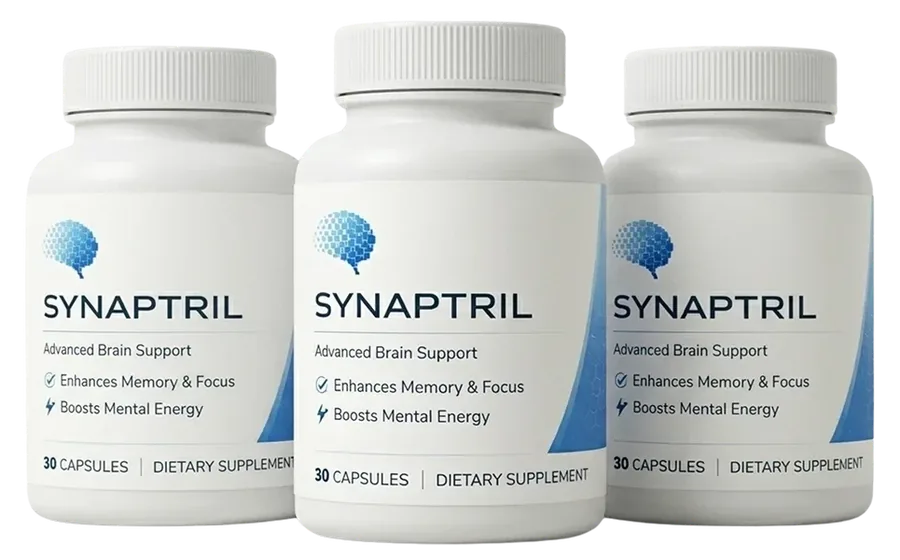
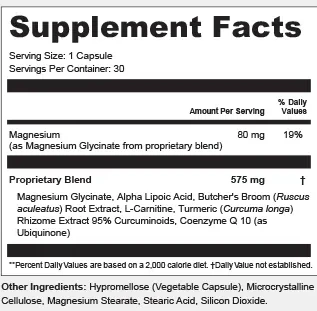
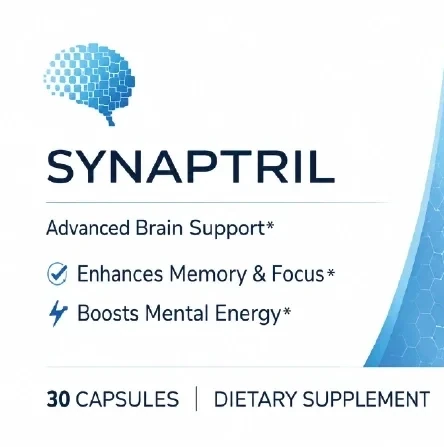
Synaptril memory and focus is the second claim on the bottle: "Enhances Memory & Focus*". No trial of Synaptril has been published, and the ingredient studies used other forms or doses. Amounts for five of the six blend lines are not printed, so the claim cannot be checked against the label.
Written by the Synaptril label deskUpdated · 4 min read

The claim01
What does the Synaptril memory and focus claim mean?
The Synaptril memory and focus claim is the line "Enhances Memory & Focus*" on the front of the bottle. It is a structure and function claim, so the FDA did not review it before sale (21 CFR 101.93, structure/function claims).
Such claims are allowed when they describe how a nutrient affects the body, and when the company holds support for them. The FTC says that support should usually be randomized, controlled human trials of the product or a close match (FTC, Health Products Compliance Guidance).
No such trial of Synaptril appears on the bottle, the sales page or our searches. So the words are a promise, not a finding. We quote them here and test them against the studies below.
Notice also that memory and focus are two different skills. Memory is storing and recalling facts. Focus is holding attention on one task. A claim that covers both asks for two kinds of proof, and the label offers neither.
Ingredient by ingredient02
What have the Synaptril ingredients been studied for?
Each Synaptril ingredient has been studied for something, but none has proof for memory or focus in healthy adults at a label-sized dose. The table lists the most each line could weigh, next to the dose researchers used.
Alpha-lipoic acid has small Alzheimer's studies at 600 mg a day, judged too limited to draw a conclusion (Linus Pauling Institute, Lipoic Acid). Butcher's broom has an EU use for heavy legs and nothing for the brain (EMA, Rusci rhizoma (butcher's broom)). Turmeric had one small pilot at 90 mg of curcumin twice a day, using a different high-absorption product (Small et al. 2018, curcumin and memory).
| Label line | Place | Per capsule | Amount used in research | Evidence |
|---|---|---|---|---|
| Magnesium Glycinate (magnesium 80 mg, 19% DV) | 1 of 6 | 80 mg magnesium (printed) | RDA 310-420 mg a day from all sources; supplement limit 350 mg (NIH ODS, Magnesium) (Mah & Pitre 2021, magnesium and sleep) | No memory trials found; a small sleep-onset effect in older adults |
| Alpha Lipoic Acid | 2 of 6 | at most 288 mg by label order; likely under 175 mg | 600 mg a day in small Alzheimer's studies (Linus Pauling Institute, Lipoic Acid) (MSKCC, Alpha-Lipoic Acid) | Too limited to judge for memory |
| Butcher's Broom (Ruscus aculeatus) Root Extract | 3 of 6 | at most 192 mg by label order; likely under 88 mg | Traditional use for heavy legs; no brain dose exists (EMA, Rusci rhizoma (butcher's broom)) | No brain or memory evidence found |
| L-Carnitine | 4 of 6 | at most 144 mg by label order; likely under 58 mg | Memory studies used acetyl-L-carnitine, 1.5-3 g a day (a different form) (NIH ODS, Carnitine) (Cochrane, acetyl-L-carnitine for dementia) | Unclear; a Cochrane review found no routine benefit |
| Turmeric (Curcuma longa) Rhizome Extract 95% Curcuminoids | 5 of 6 | at most 115 mg by label order; likely under 44 mg | 180 mg curcumin a day as Theracurmin in one 18-month pilot (NCCIH, Turmeric) (NIH LiverTox, Turmeric) (MSKCC, Turmeric) (Small et al. 2018, curcumin and memory) | Small, mixed pilot trials |
| Coenzyme Q 10 (as Ubiquinone) | 6 of 6 | at most 96 mg by label order; likely under 35 mg | Typical supplements 30-100 mg a day (NCCIH, Coenzyme Q10) (Linus Pauling Institute, Coenzyme Q10) (MSKCC, Coenzyme Q10) | No cognitive benefit in brain-disease trials |
For every line, either the studied form differs from the label form, the studied dose is larger than the label could hold, or the study asked a different question. That is why we do not call any line proven here.
Maximums are label-order ceilings from our own math, not lab figures. The studied doses come from the sources cited on each ingredient page.
Weighing it03
How strong is the evidence for brain supplements overall?
The evidence for brain supplements as a group is weak. The Global Council on Brain Health could not endorse a single ingredient or product for brain health (GCBH/AARP 2019, brain supplements).
The NCCIH finds no direct evidence that supplements prevent dementia, and that memory loss can come from treatable problems (NCCIH, supplements for cognitive function). The best-backed habits are exercise, sleep, blood pressure control and keeping the mind busy.
- Move for 150 minutes a week, with two days of strength work (CDC, Adult physical activity).
- Sleep seven hours or more.
- Learn something new and stay in touch with other people.
One standard multivitamin did show a small memory edge in older adults over two years (COSMOS multivitamin cognition, 2024). That is a different product with different contents, so it says nothing about Synaptril.
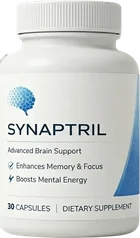
Synaptril: from $49 a bottle30 capsules · 2, 3 or 6 bottles · free shipping on 3 or 6 · 60-day money-back guarantee
See packsRealistic hopes04
What should you realistically expect from Synaptril?
Expect little you can measure and treat any change as personal, not proven. A placebo can raise how sharp you feel, so a good week does not prove a capsule did it.
Note what you want to change, such as losing your keys or drifting in meetings, and score it weekly. Compare that with your own baseline, not with a claim on a bottle.
Give any change at least a few weeks before you judge, and keep the other habits steady in that time. If you start a walking routine the same week, you will not know which one helped.
Seek a doctor if forgetfulness is new, getting worse or affecting daily tasks. A supplement is no stand-in for that visit. Our does Synaptril work page sets out each claim in the same way, and the pack picks are below if you decide to try a bottle.
American Synaptril authorized shop
Ready to try Synaptril?
Start with a medicine check, then choose your pack. Three or six bottles cost less per bottle and ship free, and each pack comes with the 60-day money-back guarantee.
- Secure checkout
- 60-day money-back guarantee
- Ships from the U.S.
FAQ05
Synaptril memory and focus questions, answered
Is there a clinical trial of Synaptril for memory?
No trial of Synaptril has been published that we can find. The label and sales page cite none. Any memory result you read online about the capsules is unverified.
Why do the claims have an asterisk?
The asterisk points to the FDA statement on the label. It says the FDA has not evaluated the claims and that the product is not meant to diagnose, treat, cure or prevent any disease.
Does magnesium alone help memory?
The NIH magnesium fact sheet covers no memory data. Magnesium is needed for normal body function, and 80 mg is about a fifth of the adult daily need, but that is not a memory result (NIH ODS, Magnesium).
Can focus change without any supplement?
Yes. Sleep, stress, movement and medicines all change focus, often more than a capsule would. That is why a written baseline matters before you judge any product.
Who wrote this06
Written and reviewed by
Pages built from the label, the sales page and linked NIH, FDA, CDC, FTC and peer-reviewed sources.
Last updated . Read our editorial standards and how we check reviews. This website is run by an American Synaptril authorized shop, not by the manufacturer or the distributor. We earn money when you buy through our order links.
Keep reading
More about Synaptril
American Synaptril authorized shop
Ready to try Synaptril?
Start with a medicine check, then choose your pack. Three or six bottles cost less per bottle and ship free, and each pack comes with the 60-day money-back guarantee.
- Secure checkout
- 60-day money-back guarantee
- Ships from the U.S.