Blog · Ingredients
The Synaptril Ingredients List, Explained One Line at a Time
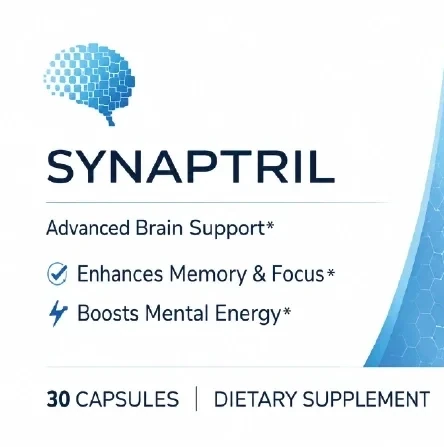
The Synaptril ingredients list names six blend lines, heaviest first: magnesium glycinate, alpha-lipoic acid, butcher's broom root extract, L-carnitine, turmeric extract and coenzyme Q10. Together they weigh 575 mg per capsule. Only the magnesium amount, 80 mg, is printed, and no trial tests the combination.
Written by the Synaptril label deskUpdated · 4 min read
Label order01
What is on the Synaptril ingredients list?
The Synaptril ingredients list has six active lines inside one proprietary blend, plus five other ingredients for the capsule. The six lines run from most to least by weight.
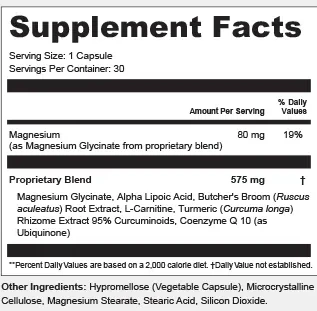
They are magnesium glycinate, alpha-lipoic acid, butcher's broom root extract, L-carnitine, turmeric rhizome extract (95% curcuminoids) and coenzyme Q10 as ubiquinone. The capsule also contains hypromellose, microcrystalline cellulose, magnesium stearate, stearic acid and silicon dioxide.
The order is the one clue to size. Under the federal rule, a line cannot weigh more than the lines before it (21 CFR 101.36, supplement labeling).
- Line one is the heaviest, and it supplies the 80 mg of magnesium.
- Lines two to six share what remains, likely 5 to 175 mg in all.
- The five fillers are not active ingredients; they shape and protect the capsule.
That split is our estimate. The label prints none of it, so treat each figure as a rough range.
Line by line02
What does each ingredient do?
Each ingredient has a known role in the body, but none has shown a memory or focus effect at the label dose. The table gives our label-order ceiling for each line and the studied dose.
The ceilings are simple: the line in place k can weigh at most 575 divided by k. Treat them as upper limits, not actual amounts.
| Label line | Place | Per capsule | Amount used in research | Evidence |
|---|---|---|---|---|
| Magnesium Glycinate (magnesium 80 mg, 19% DV) | 1 of 6 | 80 mg magnesium (printed) | RDA 310-420 mg a day from all sources; supplement limit 350 mg (NIH ODS, Magnesium) (Mah & Pitre 2021, magnesium and sleep) | No memory trials found; a small sleep-onset effect in older adults |
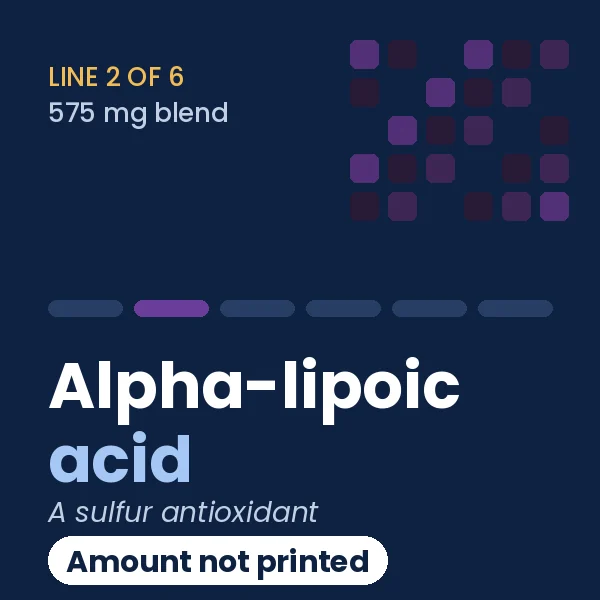
| Alpha Lipoic Acid | 2 of 6 | at most 288 mg by label order; likely under 175 mg | 600 mg a day in small Alzheimer's studies (Linus Pauling Institute, Lipoic Acid) (MSKCC, Alpha-Lipoic Acid) | Too limited to judge for memory |
| Butcher's Broom (Ruscus aculeatus) Root Extract | 3 of 6 | at most 192 mg by label order; likely under 88 mg | Traditional use for heavy legs; no brain dose exists (EMA, Rusci rhizoma (butcher's broom)) | No brain or memory evidence found |
| L-Carnitine | 4 of 6 | at most 144 mg by label order; likely under 58 mg | Memory studies used acetyl-L-carnitine, 1.5-3 g a day (a different form) (NIH ODS, Carnitine) (Cochrane, acetyl-L-carnitine for dementia) | Unclear; a Cochrane review found no routine benefit |
| Turmeric (Curcuma longa) Rhizome Extract 95% Curcuminoids | 5 of 6 | at most 115 mg by label order; likely under 44 mg | 180 mg curcumin a day as Theracurmin in one 18-month pilot (NCCIH, Turmeric) (NIH LiverTox, Turmeric) (MSKCC, Turmeric) (Small et al. 2018, curcumin and memory) | Small, mixed pilot trials |
| Coenzyme Q 10 (as Ubiquinone) | 6 of 6 | at most 96 mg by label order; likely under 35 mg | Typical supplements 30-100 mg a day (NCCIH, Coenzyme Q10) (Linus Pauling Institute, Coenzyme Q10) (MSKCC, Coenzyme Q10) | No cognitive benefit in brain-disease trials |
Estimates come from the label, not a lab test.
The evidence03
Is the evidence for these ingredients strong?
No, the evidence is thin for brain use, and absent for butcher's broom. The best-known use of each is outside memory.
Magnesium is an essential mineral with an RDA of 310 to 420 mg, and the 80 mg in a capsule is about a fifth of it (NIH ODS, Magnesium). Butcher's broom has an EU traditional use for heavy legs, and nothing for the brain (EMA, Rusci rhizoma (butcher's broom)).
For L-carnitine, the memory studies used acetyl-L-carnitine at 1.5 to 3 g a day, a different form and a far larger dose (NIH ODS, Carnitine). Turmeric's small memory pilot used a high-absorption product at 90 mg curcumin twice daily (Small et al. 2018, curcumin and memory).
Real ingredients, known safety notes and no proof for the claims. The list is open about names and closed about amounts.
CoQ10 shows the same pattern. Typical intakes run 30 to 100 mg a day and less than 5% is absorbed, yet no trial found a cognitive gain in Parkinson's or Huntington's disease (Linus Pauling Institute, Coenzyme Q10). The label does not say how much the capsule holds.
Alpha-lipoic acid is the same. Small studies at 600 mg a day were too limited to judge (Linus Pauling Institute, Lipoic Acid). Our estimate puts the capsule well under that figure.
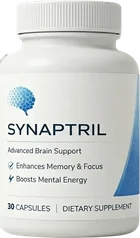
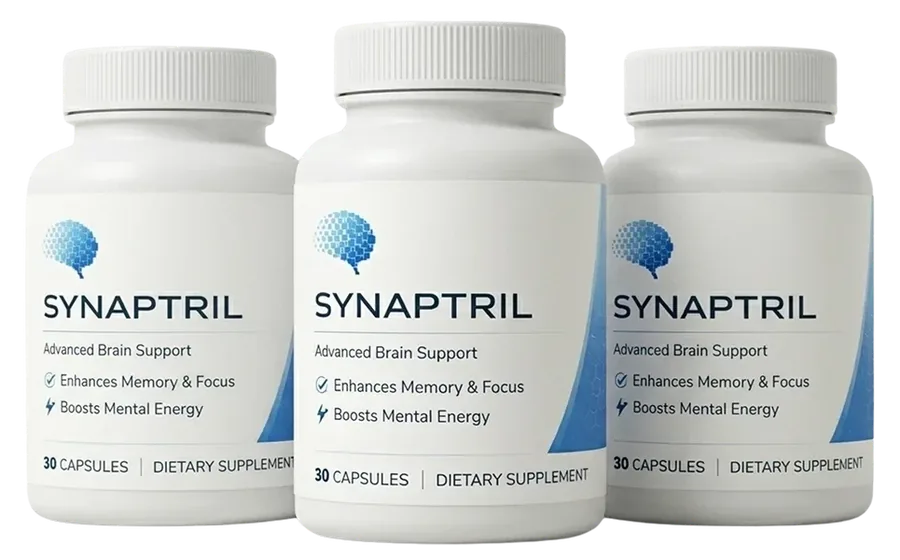
Synaptril: from $49 a bottle30 capsules · 2, 3 or 6 bottles · free shipping on 3 or 6 · 60-day money-back guarantee
See packsHow to judge it04
How should you read a supplement ingredients list?
Read a supplement ingredients list for four things: the amount of each line, the form, the order and the warnings. A list that prints all four is easier to trust.
Synaptril prints the form and the order, but only one amount. Medicine interactions are the main warnings: ALA may lower blood sugar, and CoQ10 and turmeric can matter for people on warfarin (Linus Pauling Institute, Lipoic Acid).
Short answers help here. Name the form, ask for the amount, check the order and read the caution. If a list fails the amount test, say so to yourself before you buy.
Take a printed copy of the list to your pharmacist. They can check it against your medicines in minutes. Our Synaptril ingredients page goes deeper on each line.
Stay on any prescribed medicine, and never alter it because of a supplement.
American Synaptril authorized shop
Ready to try Synaptril?
Start with a medicine check, then choose your pack. Three or six bottles cost less per bottle and ship free, and each pack comes with the 60-day money-back guarantee.
- Secure checkout
- 60-day money-back guarantee
- Ships from the U.S.
FAQ05
Questions about the ingredient list
Does Synaptril contain caffeine?
The ingredients list shows no caffeine or other stimulant. The six blend lines are magnesium glycinate, alpha-lipoic acid, butcher's broom, L-carnitine, turmeric and CoQ10.
Why is magnesium listed twice on the label?
The 80 mg of magnesium in the Supplement Facts panel comes from the magnesium glycinate inside the blend. It is one source shown two ways, not two doses.
Are the Synaptril ingredients natural?
Some come from plants, such as turmeric and butcher's broom, and others, such as ALA and CoQ10, are made in a lab. The word natural has no fixed label meaning for supplements.
What are the other ingredients in Synaptril?
Hypromellose forms the vegetable capsule. Microcrystalline cellulose, magnesium stearate, stearic acid and silicon dioxide help the powder flow and fill. They are common in supplements.
Does Synaptril list any allergens?
The label copy we read prints no allergen statement. If you have a food or plant allergy, show the full ingredient list to a pharmacist before you start.
Who wrote this06
Written and reviewed by
Pages built from the label, the sales page and linked NIH, FDA, CDC, FTC and peer-reviewed sources.
Last updated . Read our editorial standards and how we check reviews. This website is run by an American Synaptril authorized shop, not by the manufacturer or the distributor. We earn money when you buy through our order links.
Keep reading
More about Synaptril
American Synaptril authorized shop
Ready to try Synaptril?
Start with a medicine check, then choose your pack. Three or six bottles cost less per bottle and ship free, and each pack comes with the 60-day money-back guarantee.
- Secure checkout
- 60-day money-back guarantee
- Ships from the U.S.