Blog · Ingredient basics
Focus Ingredients Explained: What Sits Behind the Claim on the Bottle
Focus ingredients are the minerals, plant extracts and nutrients a supplement brand puts under a focus claim. Synaptril lists six: magnesium glycinate, alpha-lipoic acid, butcher's broom, L-carnitine, turmeric extract and coenzyme Q10. None has proof of sharper focus in healthy adults, and the label hides five of the six amounts.
Written by the Synaptril label deskUpdated · 4 min read
Definition01
What are focus ingredients?
Focus ingredients are the substances a brand names on the bottle to suggest better attention. They are usually vitamins, minerals, amino acid forms, herbs and plant extracts, sometimes with caffeine.
The term is marketing, not science. No agency keeps a list of approved focus ingredients. A company may describe what a nutrient does in the body, but it may not say the product treats a disease (21 CFR 101.93, structure/function claims).
This is why two bottles with the same claim can hold very different things. One may lean on caffeine, another on a herb, another on a mineral. The shared word on the front says little about the contents.
Researchers who study brain health have looked at the whole category. The Global Council on Brain Health reviewed brain supplements and endorsed none (GCBH/AARP 2019, brain supplements). So the word "focus" tells you what the seller hopes you will feel, not what a trial found.
The six lines02
Which focus ingredients are in Synaptril?
Synaptril lists six blend lines, and magnesium glycinate comes first. The others follow by weight: alpha-lipoic acid, butcher's broom root extract, L-carnitine, turmeric extract and coenzyme Q10.
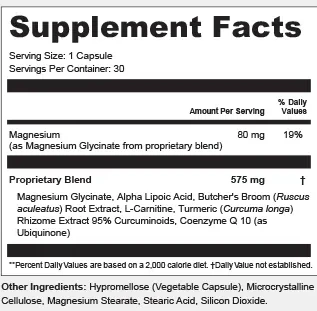
Only the magnesium is printed as an amount, 80 mg per capsule. The rest share what remains of a 575 mg blend. The table below shows the most each line can weigh and the doses that researchers have actually tested.
| Label line | Place | Per capsule | Amount used in research | Evidence |
|---|---|---|---|---|
| Magnesium Glycinate (magnesium 80 mg, 19% DV) | 1 of 6 | 80 mg magnesium (printed) | RDA 310-420 mg a day from all sources; supplement limit 350 mg (NIH ODS, Magnesium) (Mah & Pitre 2021, magnesium and sleep) | No memory trials found; a small sleep-onset effect in older adults |
| Alpha Lipoic Acid | 2 of 6 | at most 288 mg by label order; likely under 175 mg | 600 mg a day in small Alzheimer's studies (Linus Pauling Institute, Lipoic Acid) (MSKCC, Alpha-Lipoic Acid) | Too limited to judge for memory |
| Butcher's Broom (Ruscus aculeatus) Root Extract | 3 of 6 | at most 192 mg by label order; likely under 88 mg | Traditional use for heavy legs; no brain dose exists (EMA, Rusci rhizoma (butcher's broom)) | No brain or memory evidence found |
| L-Carnitine | 4 of 6 | at most 144 mg by label order; likely under 58 mg | Memory studies used acetyl-L-carnitine, 1.5-3 g a day (a different form) (NIH ODS, Carnitine) (Cochrane, acetyl-L-carnitine for dementia) | Unclear; a Cochrane review found no routine benefit |
| Turmeric (Curcuma longa) Rhizome Extract 95% Curcuminoids | 5 of 6 | at most 115 mg by label order; likely under 44 mg | 180 mg curcumin a day as Theracurmin in one 18-month pilot (NCCIH, Turmeric) (NIH LiverTox, Turmeric) (MSKCC, Turmeric) (Small et al. 2018, curcumin and memory) | Small, mixed pilot trials |
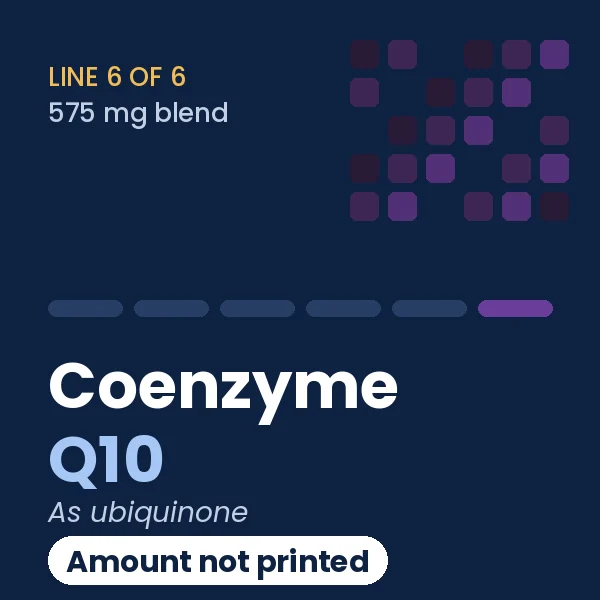
| Coenzyme Q 10 (as Ubiquinone) | 6 of 6 | at most 96 mg by label order; likely under 35 mg | Typical supplements 30-100 mg a day (NCCIH, Coenzyme Q10) (Linus Pauling Institute, Coenzyme Q10) (MSKCC, Coenzyme Q10) | No cognitive benefit in brain-disease trials |
Ceilings come from the label order rules (21 CFR 101.36, supplement labeling). They are estimates from the label, not lab results.
Evidence03
Do focus ingredients improve attention?
No trial shows that these six ingredients, in this mix, improve attention. Each has been studied alone, usually for something else.
Turmeric is the closest case. One small study of 40 adults aged 51 to 84 used a high-absorption curcumin product twice a day for 18 months and saw gains in verbal memory and attention. It was a pilot, and the product was a different form from the label's extract (Small et al. 2018, curcumin and memory).
Butcher's broom has no brain research at all. Its traditional use is for heavy legs from minor circulation problems (EMA, Rusci rhizoma (butcher's broom)). Magnesium is a needed mineral, but the Office of Dietary Supplements lists no memory data for it (NIH ODS, Magnesium).
The 2017 review for the National Academies found only three things encouraging for cognitive health: cognitive training, blood pressure control and physical activity (NIH on NASEM 2017 dementia prevention).
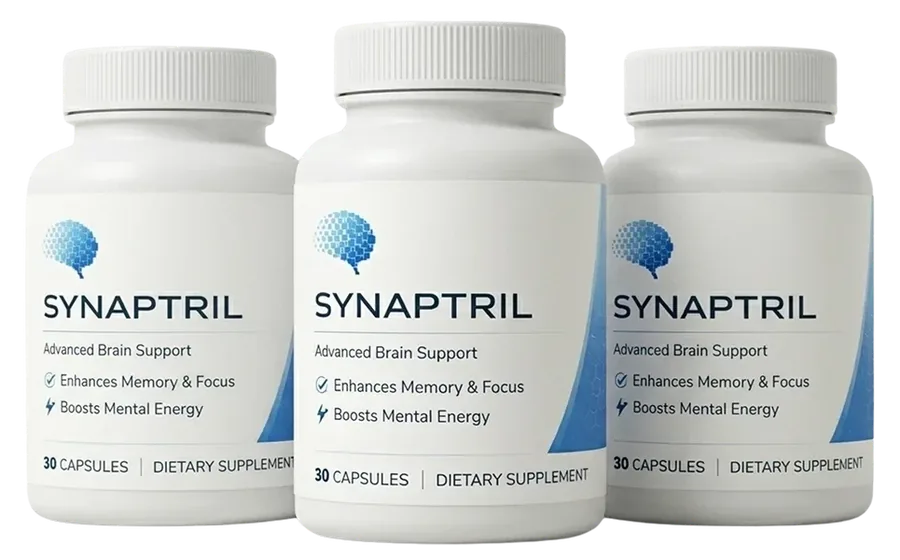
Synaptril: from $49 a bottle30 capsules · 2, 3 or 6 bottles · free shipping on 3 or 6 · 60-day money-back guarantee
See packsHow to judge04
How do you judge a focus ingredient list?
Judge a focus ingredient list by whether it prints every amount and whether the studied dose matches. Three quick checks do most of the work.
Is each amount printed?
A blend total hides the split. Synaptril prints one amount out of six.
Is the form the studied form?
The label says L-carnitine. The memory studies used acetyl-L-carnitine, a different form (NIH ODS, Carnitine).
Is there a product trial?
Ingredient research does not transfer to a mix. Ask for a trial of the finished capsule.
Read the full list on our Synaptril ingredients page. If you still want to try the capsules, the 60-day guarantee gives you a window to decide. Take one capsule daily, keep taking any prescribed medicine, and ask a physician first if you have a medical condition.
American Synaptril authorized shop
Ready to try Synaptril?
Start with a medicine check, then choose your pack. Three or six bottles cost less per bottle and ship free, and each pack comes with the 60-day money-back guarantee.
- Secure checkout
- 60-day money-back guarantee
- Ships from the U.S.
FAQ05
Focus ingredient questions
What is the most common focus ingredient in supplements?
Caffeine is the most common stimulant in focus products, but Synaptril lists none. Among non-stimulants, B vitamins, magnesium, herbal extracts and amino acid forms appear often. Common does not mean proven, so check the evidence for each line.
Do focus ingredients need to be taken for weeks?
Brands often say so, but no rule sets a timeline for these ingredients. Magnesium and others build up slowly, if at all. Track your own attention for a few weeks, and use the 60-day guarantee window.
Are plant extracts safer than other focus ingredients?
Not automatically. Turmeric extract has been tied to rare liver injury reports, and the LiverTox database rates the link as well established (NIH LiverTox, Turmeric). Natural origin does not remove the need to check cautions.
Can food replace focus ingredients?
Food, sleep and movement cover the basics first. Poor sleep alone hurts learning and focus (NHLBI, Sleep Deprivation). Adults who sleep seven or more hours and stay active remove many causes of poor concentration before any capsule is needed.
Is a bigger blend weight better for focus?
No. A blend weight of 575 mg is only the total of six lines, and magnesium glycinate takes most of it. A bigger total tells you nothing about how much of any one focus ingredient you get, so look for printed amounts instead.
Who wrote this06
Written and reviewed by
Pages built from the label, the sales page and linked NIH, FDA, CDC, FTC and peer-reviewed sources.
Last updated . Read our editorial standards and how we check reviews. This website is run by an American Synaptril authorized shop, not by the manufacturer or the distributor. We earn money when you buy through our order links.
Keep reading
More about Synaptril

American Synaptril authorized shop
Ready to try Synaptril?
Start with a medicine check, then choose your pack. Three or six bottles cost less per bottle and ship free, and each pack comes with the 60-day money-back guarantee.
- Secure checkout
- 60-day money-back guarantee
- Ships from the U.S.